

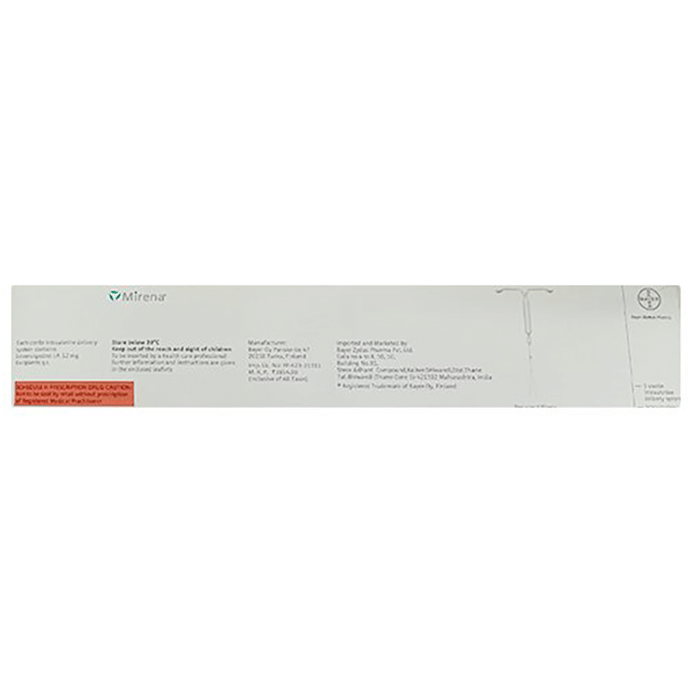
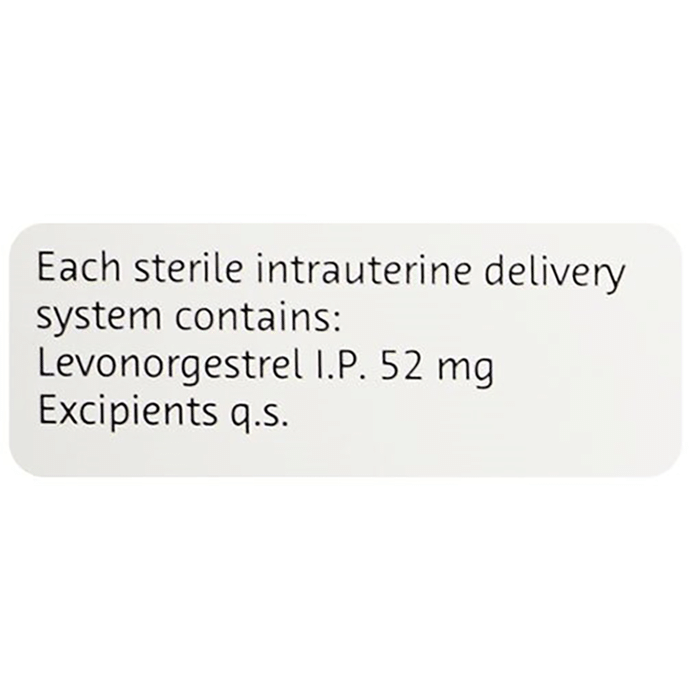
Mirena Intrauterine Delivery System
Prescription Required
Inclusive of all taxes
Product Informations: Mirena Intrauterine Delivery System
Information About Mirena Intrauterine Delivery System
In Contraception Mirena Intrauterine Delivery System is a device that stops you from getting pregnant. It is a reliable and safe method for contraception, if used correctly. It does not interrupt with sex and you can lead a normal routine life without any worries. Follow your doctor’s instructions carefully to get maximum benefit. In Heavy menstrual bleeding Mirena Intrauterine Delivery System slows the growth of the lining of the womb before menstruation, which reduces the bleeding during menstruation. If heavy periods become such a problem that they interfere with your everyday life, then try taking things a little easier on those days. Some women find that relaxation techniques or yoga help them feel more relaxed and reduce stress. Getting a lot of exercise can also help.
Benefits
Description
How to use
Common Side Effect
- Ovarian cysts
- Pelvic pain
- Dizziness
Safety Advice
No interaction found/established
No interaction found/established
No interaction found/established
No interaction found/established
No interaction found/established
No interaction found/established
Missed dose
How Its Works
Fact Box
Question and Answer
- Q. Q. What is Mirena Intrauterine Delivery System and what it is used for??
Ans: Mirena Intrauterine Delivery System is a device, placed inside the uterus. It contains Levonorgestrel, a type of progesterone (a female sex hormone) which is released slowly once the device is inserted. It is used as a long-term (5 years) method of contraception (to prevent pregnancy). It may also be used to relieve heavy menstrual periods and as a part of hormone replacement therapy (HRT). - Q. Q. When and how to use Mirena Intrauterine Delivery System??
Ans: For the first time Mirena Intrauterine Delivery System is usually inserted either during your periods or within seven days from the beginning of your period, if it is being recommended for contraception or for heavy menstrual bleeding. If you already have Mirena Intrauterine Delivery System placed and it is time to replace with new one, then you do not have to wait for your periods. For HRT, it may be inserted anytime. It is inserted by the doctor or trained nurse at a health care facility. - Q. Q. For how long, Mirena Intrauterine Delivery System provides contraception??
Ans: It prevents pregnancy until it is removed or up to a maximum of 5 years. - Q. Q. Does Mirena Intrauterine Delivery System provide 100% protection from pregnancy??
Ans: No, Mirena Intrauterine Delivery System is 99% effective which means that 1 out of 100 women using Mirena Intrauterine Delivery System may get pregnant. - Q. Q. Can I become pregnant after I stop using Mirena Intrauterine Delivery System??
Ans: Yes, your fertility returns to normal immediately after you stop using Mirena Intrauterine Delivery System. - Q. Q. What are the common side effects of using Mirena Intrauterine Delivery System??
Ans: The common side effects of using Mirena Intrauterine Delivery System are vaginal bleeding, infrequent menstrual periods, abdominal cramping, headache, weight gain, nausea, and acne. Most of them are temporary, however, if these side effects persist consult with your doctor.
Marketer details
FDC Ltd | B-8, MIDC Area, Waluj - 431 136, Dist. Aurangabad, Maharashtra
Alternatives and Substitutes
1 AL AX 5mg/75mg Capsule
Marketer/Manufacturer: Abbott || ₹14.5/tablet (25% cheaper)
Customer Reviews
No customer reviews yet.
References
FDA approved prescribing information. Levocitrizine; 1995 [revised May 2007]. [Accessed 01 Apr. 2019] (online) Available from: Read More
European Medicne Agency. Revised assessment report: Ambroxol and bromhexine containing medicinal products. 2015. [Accessed 01 Apr. 2019] (online) Available from: Read More
ScienceDirect. Ambroxol. [Accessed 01 Apr. 2019] (online) Available from: Read More
Levocitrizine. Slough, Berkshire: UCB Pharma Limited; 2007 [revised 27 Mar. 2019]. [Accessed 01 Apr. 2019] (online) Available from: Read More
View all substitutes
Total items: (2)
| QTY | Stock Status | Brand Name | Generic Name | Strength | Form | Size | MRP | Discount | Net Cost | MFR | Type | Add Cart |
|---|---|---|---|---|---|---|---|---|---|---|---|---|
|
|
Levodiva Device | Levonorgestrel (intrauterine delivery system) (52mg) | 52mg | Unit | packet of 1 Unit | ₹3509.00 | ₹3,509.00 | ₹0.00 | Bhar... | RX | ||
|
|
Eloira Hormonal Intrauterine system | Levonorgestrel (intrauterine delivery system) (52mg) | 52mg | Intrauterine system | box of 1 Intrauterine system | ₹3785.00 | ₹3,785.00 | ₹0.00 | Preg... | RX |
Available options.
Same salt composition: Levonorgestrel (intrauterine delivery system) (52mg)
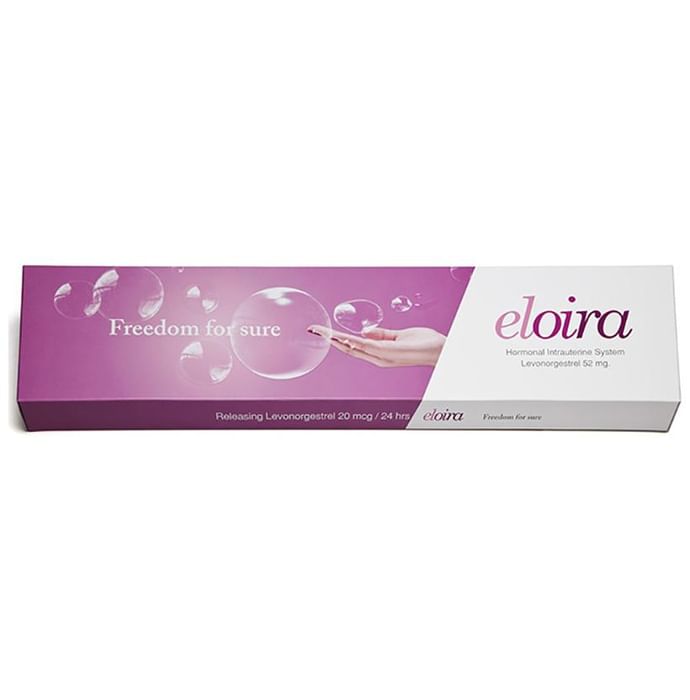
Eloira Hormonal Intrauterine system
Test Buy medical disposable face mask
to protect your loved ones


We want to give you 10% discount for your first order,
Use discount code at checkout


We want to give you 10% discount for your first order,
Use discount code at checkout