
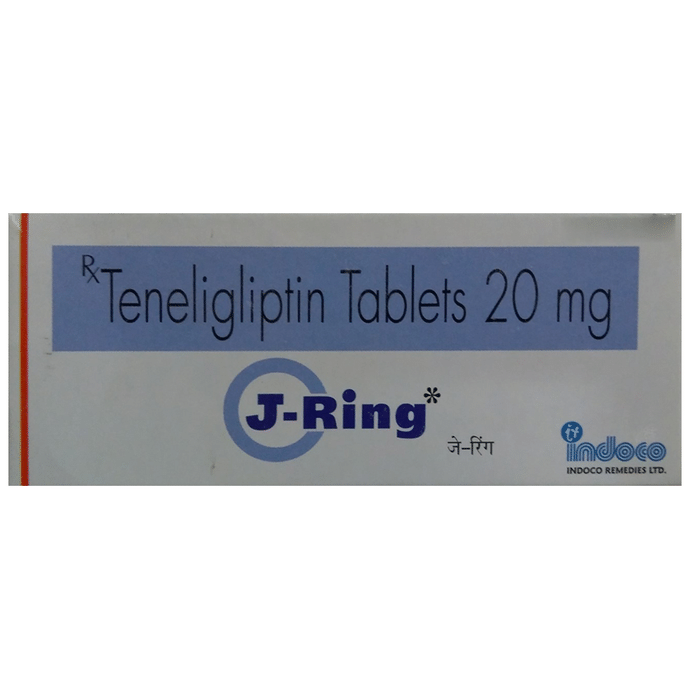
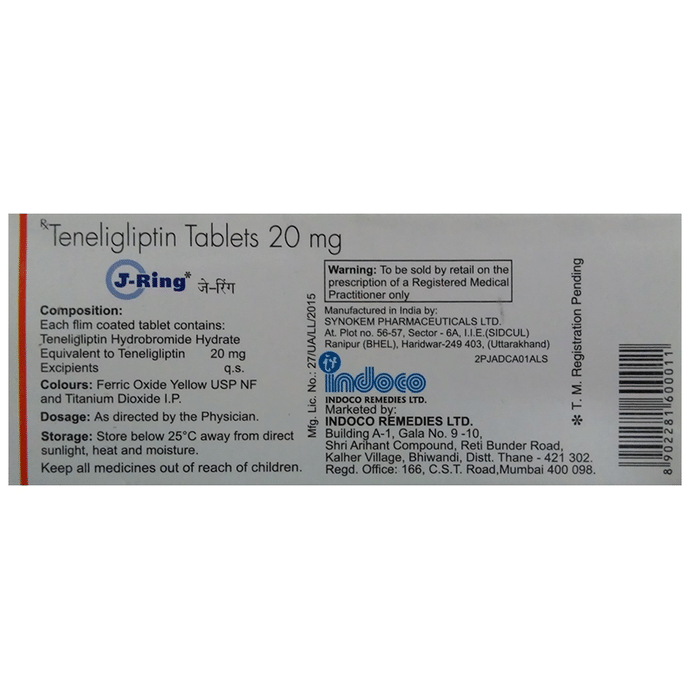
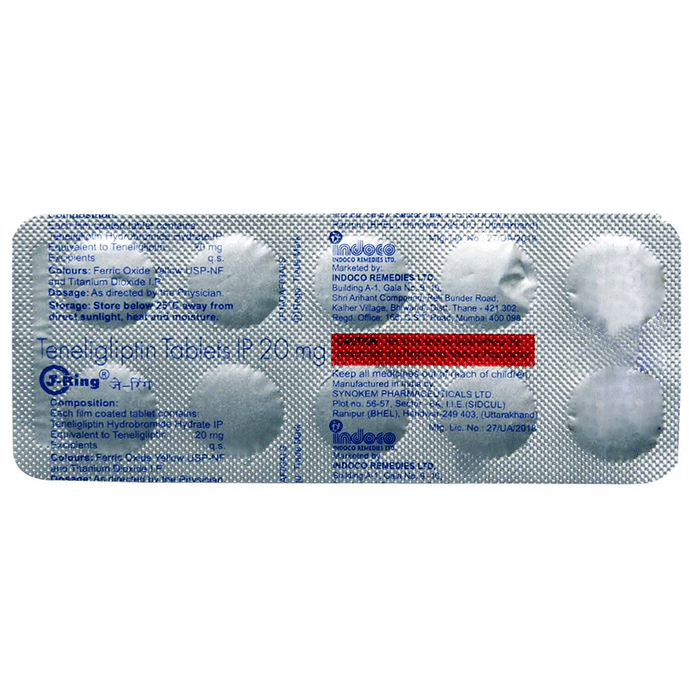
Product Informations: J-Ring Tablet
Information About J-Ring Tablet
In Treatment of Type 2 diabetes mellitus J-Ring Tablet belongs to a group of medicines called DPP-4 inhibitors (or gliptins). It helps increase the amount of insulin your body produces after a meal and to stop your body from releasing too much glucose (sugar) into your blood. This way it lowers the blood glucose levels in your body. It is usually taken once a day and has relatively few common side effects. Lowering blood glucose levels is an essential part of managing diabetes. If you can control the level you will reduce the risk of getting any of the serious complications of diabetes such as kidney damage, blindness, and loss of limbs. Proper control of diabetes can also reduce the risk of heart disease and stroke. Taking this medicine regularly along with a proper program of diet and exercise will help you live a normal, healthy life. You should keep using it for as long as it is prescribed.
Benefits
Description
How to use
Common Side Effect
- Headache
- Diarrhea
- Hypoglycemia (low blood glucose level)
- Nausea
- Vomiting
Safety Advice
It is unsafe to consume alcohol with J
Pregnancy : CONSULT YOUR DOCTOR
Ring Tablet may be unsafe to use during pregnancy. Although there are limited studies in humans, animal studies have shown harmful effects on the developing baby. Your doctor will weigh the benefits and any potential risks before prescribing it to you. Please consult your doctor.
J
Driving : CAUTION
Kidney : SAFE IF PRESCRIBED
Ring Tablet is safe to use in patients with kidney disease. No dose adjustment of J
Liver : SAFE IF PRESCRIBED
Ring Tablet is safe to use in patients with liver disease. No dose adjustment of J
Missed dose
If you miss a dose of J-Ring Tablet, take it as soon as possible. However, if it is almost time for your next dose, skip the missed dose and go back to your regular schedule. Do not double the dose.
How Its Works
Fact Box
Question and Answer
- Q. Q. Does J-Ring Tablet cause weight gain??
Ans: No, J-Ring Tablet is not known to cause weight gain by itself. However, keeping a healthy weight is an important part of managing diabetes. Consult your doctor if you experience weight gain while taking J-Ring Tablet. - Q. Q. Is J-Ring Tablet bad for your kidneys??
Ans: No, J-Ring Tablet is not bad for your kidneys if your kidney function is normal. However, it is important to inform your doctor if you have, or ever had, any kidney problems. If you have kidney problems, you may need dose modification. - Q. Q. Do I still have to manage my diet and exercise while on J-Ring Tablet??
Ans: Yes, it is important to manage your diet and exercise while taking J-Ring Tablet. In addition to medicine, making healthy food choices and being physically active are also important to effectively manage blood sugar levels. You may consult a dietitian and follow a diet chart that suits you best. A well-balanced diet is one part of a healthy lifestyle for people with type 2 diabetes. Additionally, thirty minutes of exercise such as a brisk walk is recommended. - Q. Q. Can my blood sugar levels go too low on J-Ring Tablet??
Ans: Yes, it is possible that your blood sugar levels may become very low (hypoglycemia). The chances are higher if you are on any other antidiabetic medicine or insulin along with J-Ring Tablet. Additionally, blood sugar levels can take a huge dip if you skip meals, exercise more than usual, or if you have taken an overdose of J-Ring Tablet. If you experience a sudden fall in your sugar levels, inform your doctor. The doctor may suggest dose modification to prevent your blood sugar levels from decreasing significantly (hypoglycemia). Follow your doctor’s advice and monitor your blood sugar levels regularly. - Q. Q. How long do I need to take J-Ring Tablet??
Ans: J-Ring Tablet only helps to manage your blood sugar levels but does not cure your diabetes. Keep taking J-Ring Tablet as long as your doctor recommends it. You may have to take it lifelong. It is important to keep your blood sugar levels under control as any fluctuations in your blood sugar levels may cause serious problems. Therefore, do not stop taking it without talking to your doctor. - Q. Q. What will happen if I accidentally take more than the prescribed dose of J-Ring Tablet??
Ans: If you have accidentally taken more than the prescribed dose of J-Ring Tablet, your blood sugar levels may become too low (hypoglycemia). This hypoglycemia may be mild or severe. Monitor your blood sugar levels more frequently for the next 24 hours. Mild episodes of hypoglycemia (with symptoms like anxiety, sweating, weakness, tremors, fast heartbeat) can usually be corrected with the help of sugary foods such as sugar or glucose candy, fruit juice and glucose/glucon-D. However, it is important to consult your doctor to decide the further course of treatment. More severe episodes of hypoglycemia may even lead to a seizure (fit) or unconsciousness. This can be life-threatening and immediate medical help may be required. - Q. Q. What if I miss a dose of J-Ring Tablet??
Ans: If you miss a dose, take it as soon as you remember. If in case you do not remember until it is time for your next dose, skip the missed dose and go back to your regular schedule. Do not take two doses of J-Ring Tablet at the same time. - Q. Q. What is the most important information I should know about J-Ring Tablet??
Ans: J-Ring Tablet is safe to use if taken in the dose and duration prescribed by the doctor. However, in rare cases, some serious side effects can also be observed. In some people, J-Ring Tablet may cause inflammation of the pancreas (pancreatitis) which could be severe and can even lead to death. If you experience severe and persistent pain in your stomach area (abdomen), stop the medication and immediately contact your doctor. J-Ring Tablet can also cause heart failure. This means the heart is not able to pump blood well enough, therefore, inform your doctor if you have or ever had heart problems before you start taking J-Ring Tablet. In addition to that, problems related to kidneys should also be discussed with the doctor. - Q. Q. Is J-Ring Tablet safe to be taken for a long term??
Ans: Yes, it is safe to take J-Ring Tablet for a long time. Its long-term use, which can continue for months, years or even lifelong, has not shown any harmful effects. Keep taking J-Ring Tablet as long as your doctor recommends it. Remember, J-Ring Tablet only helps to keep your blood sugar levels under control but does not cure your diabetes.
Marketer details
FDC Ltd | B-8, MIDC Area, Waluj - 431 136, Dist. Aurangabad, Maharashtra
Alternatives and Substitutes
1 AL AX 5mg/75mg Capsule
Marketer/Manufacturer: Abbott || ₹14.5/tablet (25% cheaper)
Customer Reviews
No customer reviews yet.
References
FDA approved prescribing information. Levocitrizine; 1995 [revised May 2007]. [Accessed 01 Apr. 2019] (online) Available from: Read More
European Medicne Agency. Revised assessment report: Ambroxol and bromhexine containing medicinal products. 2015. [Accessed 01 Apr. 2019] (online) Available from: Read More
ScienceDirect. Ambroxol. [Accessed 01 Apr. 2019] (online) Available from: Read More
Levocitrizine. Slough, Berkshire: UCB Pharma Limited; 2007 [revised 27 Mar. 2019]. [Accessed 01 Apr. 2019] (online) Available from: Read More
View all substitutes
Total items: (349)
| QTY | Stock Status | Brand Name | Generic Name | Strength | Form | Size | MRP | Discount | Net Cost | MFR | Type | Add Cart |
|---|---|---|---|---|---|---|---|---|---|---|---|---|
|
|
Tenigo 20mg Tablet | Teneligliptin (20mg) | 20mg | Tablet | strip of 10 tablets | ₹99.00 | ₹19.80 | ₹79.20 | Selu... | RX | ||
|
|
Tezaglit 20mg Tablet | Teneligliptin (20mg) | 20mg | Tablet | strip of 10 tablets | ₹99.00 | ₹19.80 | ₹79.20 | Glob... | RX | ||
|
|
Teniglip 20mg Tablet | Teneligliptin (20mg) | 20mg | Tablet | strip of 10 tablets | ₹71.50 | ₹14.30 | ₹57.20 | Biod... | RX | ||
|
|
Tenegood 20mg Tablet | Teneligliptin (20mg) | 20mg | Tablet | strip of 10 tablets | ₹108.00 | ₹21.60 | ₹86.40 | Fore... | RX | ||
|
|
Tenigly 20mg Tablet | Teneligliptin (20mg) | 20mg | Tablet | strip of 10 tablets | ₹109.00 | ₹21.80 | ₹87.20 | Glyn... | RX | ||
|
|
Tenelect 20mg Tablet | Teneligliptin (20mg) | 20mg | Tablet | strip of 10 tablets | ₹97.00 | ₹19.40 | ₹77.60 | Elin... | RX | ||
|
|
Joten 20mg Tablet | Teneligliptin (20mg) | 20mg | Tablet | strip of 10 tablets | ₹116.00 | ₹23.20 | ₹92.80 | Jaru... | RX | ||
|
|
Afoglip Tablet | Teneligliptin (20mg) | 20mg | Tablet | strip of 15 tablets | ₹166.15 | ₹33.23 | ₹132.92 | Torr... | RX | ||
|
|
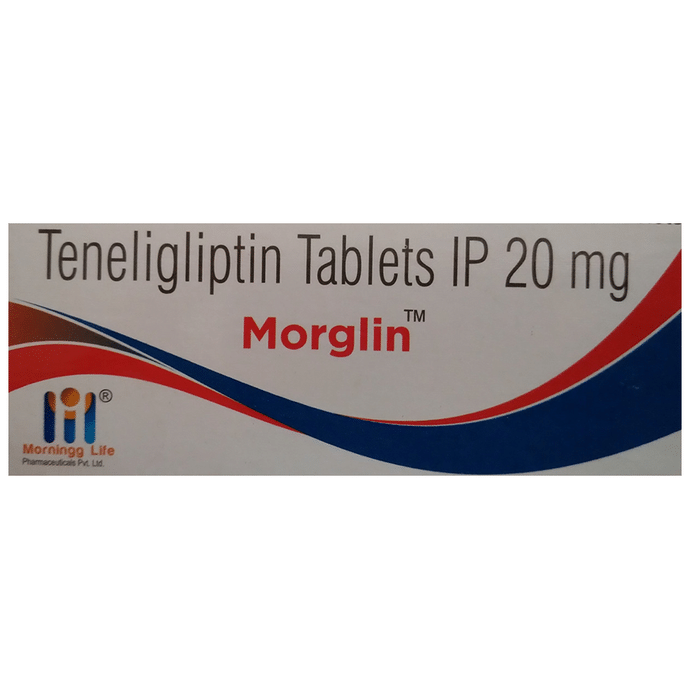
Morglin Tablet | Teneligliptin (20mg) | 20mg | Tablet | strip of 10 tablets | ₹99.00 | ₹19.80 | ₹79.20 | Morn... | RX | ||
|
|
Juleptin 20mg Tablet | Teneligliptin (20mg) | 20mg | Tablet | strip of 10 tablets | ₹99.00 | ₹19.80 | ₹79.20 | Magn... | RX |
Available options.
Same salt composition: Teneligliptin (20mg)
- Sale
- Sale
- Sale
- Sale
- Sale
- Sale
- Sale
- Sale
- Sale
- Sale
- Sale
- Sale
Test Buy medical disposable face mask
to protect your loved ones


We want to give you 10% discount for your first order,
Use discount code at checkout


We want to give you 10% discount for your first order,
Use discount code at checkout